
With the increasing attention on the “informed market”, ESG information becomes more and more important to investors, who see an organised package of non-financial performance of companies as a powerful auxiliary tool-kit for analysis in making investment decisions. Providing sufficient ESG information not only informs investors in decision-making, but also allows them to gain confidence about the business development of a company in the long-term prospect.
With no doubt that ESG information can be used to inform ESG strategies and optimise business operations, and around 37% of the business leaders in Hong Kong have already integrated ESG issues into their strategic planning. The ascending trend of ESG consciousness reflects that more companies put focus on reviewing and overseeing its development in regulatory framework, identifying gaps, and pricing the risks and opportunities in their businesses. Environmental and social risks are inherently related to the financial risk, policy and legal risk, reputational risk, market risk and technological risk. And this calls for creative, concrete and immediate actions to improve internal governance structures and incorporate environmental innovation, resource usage, human rights, supply chain management and many more issues into business strategies, thereby reducing the whole spectrum of other related risks. Sound ESG practices generate sustainable values for the business and facilitate the resilience building process of organisations in a long run. An excellent ESG performance based on a deep understanding of what ESG constitutes and how to align corporate policies with ESG standards can enhance reputation in the industry, appealing to the growing public expectations around corporate responsibility.
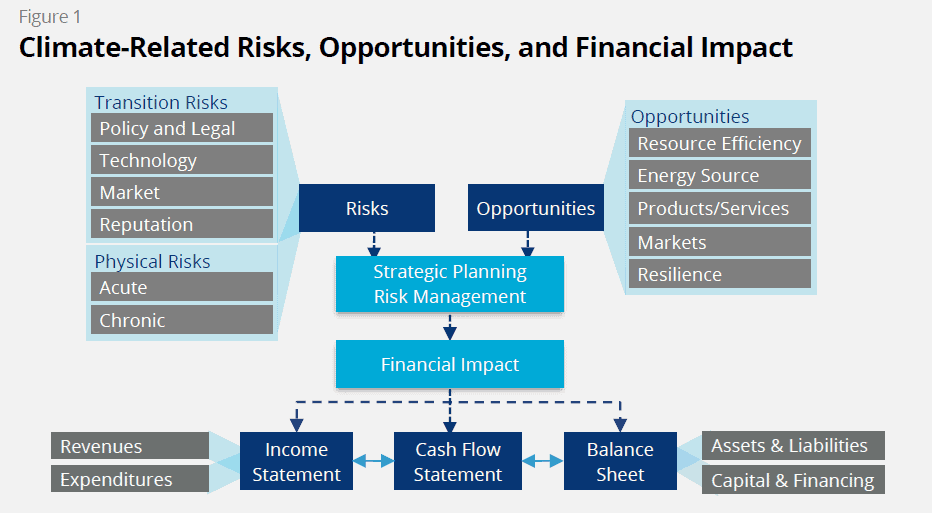
Source: Recommendations of the Task Force on Climate-related Financial Disclosures
Environmental and social risks are inherently related to financial risk, policy and legal risk, reputational risk, market risk and technological risk. And this calls for creative, concrete and immediate actions to improve internal governance structures and incorporate environmental innovation, resource usage, human rights, supply chain management and many more issues into business strategies, thereby reducing the whole spectrum of other related risks. Sound ESG practices generate sustainable values for the business and facilitate the resilience building process of organisations in the long run. An excellent ESG performance based on a deep understanding of what ESG constitutes and how to align corporate policies with ESG standards can enhance reputation in the industry, appealing to the growing public expectations around corporate responsibility.


GreenCo App